Greenstead
Digitizing farm-to-table, one honest order at a time
Picture the back door of a busy kitchen at 6 a.m.—crates of greens, clipboards, and three different text threads to confirm a single delivery. Greenstead’s founder came from that world and wanted small farms and restaurants to trade as easily as they do with the big guys. We helped turn that gut-level pain into a brand and a minimum viable product (MVP) designed for real service hours, not slide decks.

THE CHALLENGE
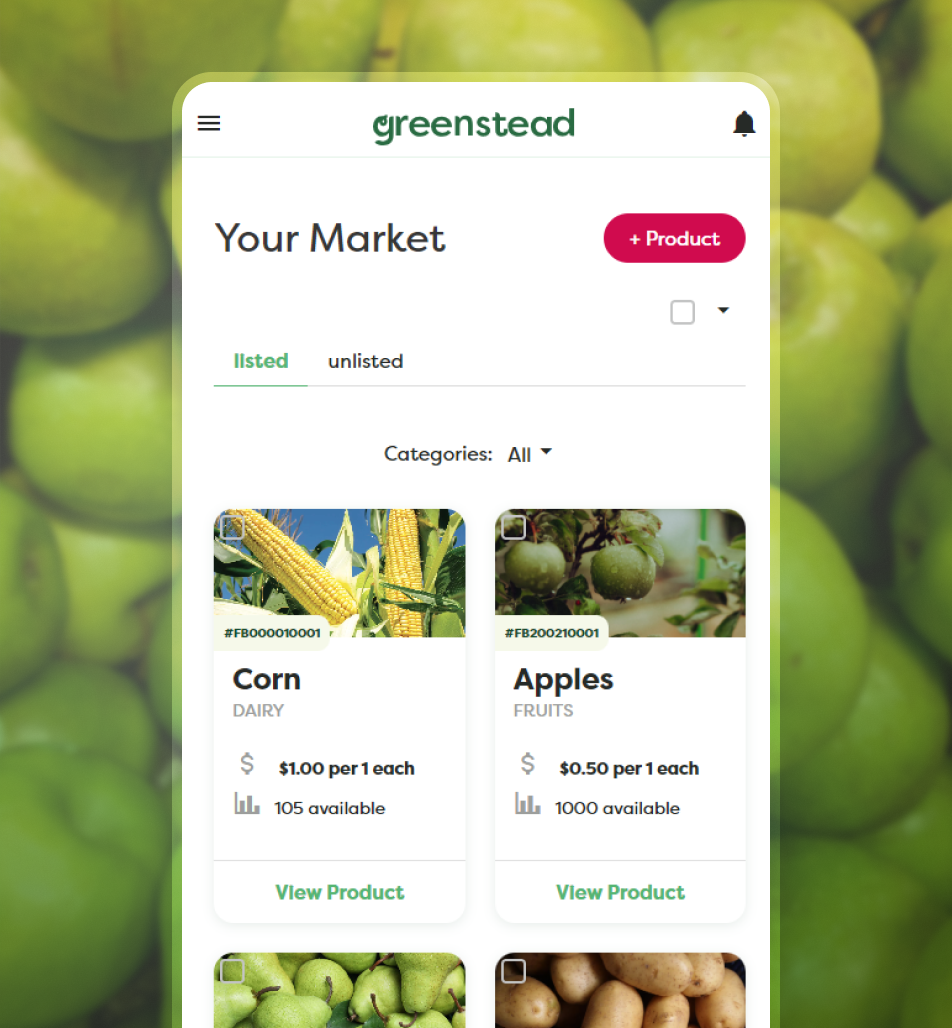
Create a brand and MVP for a two-sided marketplace where independent farms sell directly to restaurants. Keep the first release narrow: core catalog, availability by date, substitutions, and clean invoices. Success meant prototype kitchens could understand in five minutes, a build we could deliver quickly, and a stack the team could operate.
What we made (and why)
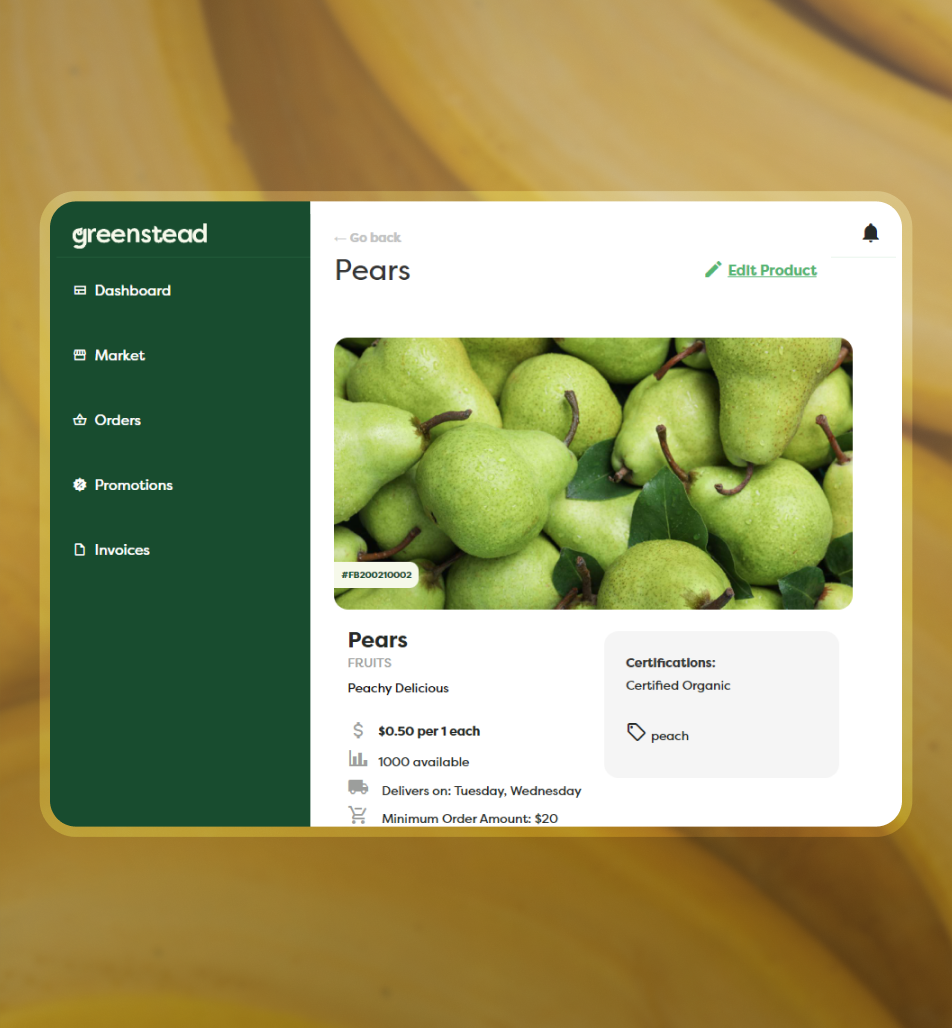
A concise brand system (logo, palette, tone) that felt earthy without going rustic. An information architecture built around three verbs—find, order, confirm. We first shipped a clickable prototype, then built the full MVP using a Vue.js single‑page app talking to a .NET API, deployed to Azure for dependable hosting and quick iterations. Microcopy did quiet kindnesses: plain units, allergy flags, and “what changed since last order.” Export and share worked the way kitchens actually communicate.
“That was easy—and no one had to chase a text at 5 a.m.”
How we kept it human—and fast
Name the moments, not just the features.
We organized scope around service moments (menu planning, pre-service reorder, post-delivery reconciliation) → screens answered those exact needs, so adoption felt natural.
Prioritize reliability over novelty.
We chose predictable patterns—lists, badges, and plain-English labels—over clever UI flourishes → fewer mis-taps on the line and less training for farm crews.
Constrained to earn speed.
We limited v1 to “order for a specific delivery day” and a tight product schema → simpler data model, clearer promises, and less back-and-forth when crops ran short.
RESULTS (AND WHAT'S NEXT)
Greenstead left our engagement with a clear story, a usable MVP, and developer-ready tickets for the next release. Early walkthroughs with chefs and growers validated the flow and surfaced the right next features (standing orders; route batching). The company later closed due to the pandemic’s devastating effect on the restaurant industry and upstream providers; the brand, working product, and backlog continue to live on as reusable patterns for future farm‑to‑restaurant tools.
Before → After: Texts, spreadsheets, guesswork → one place to browse, order, and confirm with receipts that match the truck.